Dubai is once again proving that the “impossible” is simply a starting point for its infrastructure. The city has officially broken ground on the Elon Musk Dubai Loop Underground Project, a high-speed transportation network developed by The Boring Company. Announced by Mattar Al Tayer, Director General of the Roads & Transport Authority (RTA), at the 2026 World Governments Summit, this AED2 billion initiative is set to transform navigation through the city’s most densely populated corridors.
This innovative system uses dedicated underground tunnels to transport passengers in electric vehicles, bypassing surface-level gridlock entirely. By embracing this futuristic model, Dubai becomes the second city in the world, after Las Vegas, to implement the tunnel-based transport system pioneered by Elon Musk.
وقّعت هيئة الطرق والمواصلات في دبي، خلال انعقاد أعمال القمة العالمية للحكومات 2026، التي تختتم أعمالها بدبي 5 فبراير الجاري، اتفاقية شراكة استراتيجية مع شركة ” ذا بورينج كومباني” الأمريكية ، المتخصصة في تطوير أنظمة الأنفاق وحلول نقل الركاب المبتكرة، لبدء تنفيذ مشروع أنفاق متطورة… pic.twitter.com/fvdAExMd5r
— RTA (@rta_dubai) February 3, 2026
The Pilot Route: Connecting DIFC and Dubai Mall
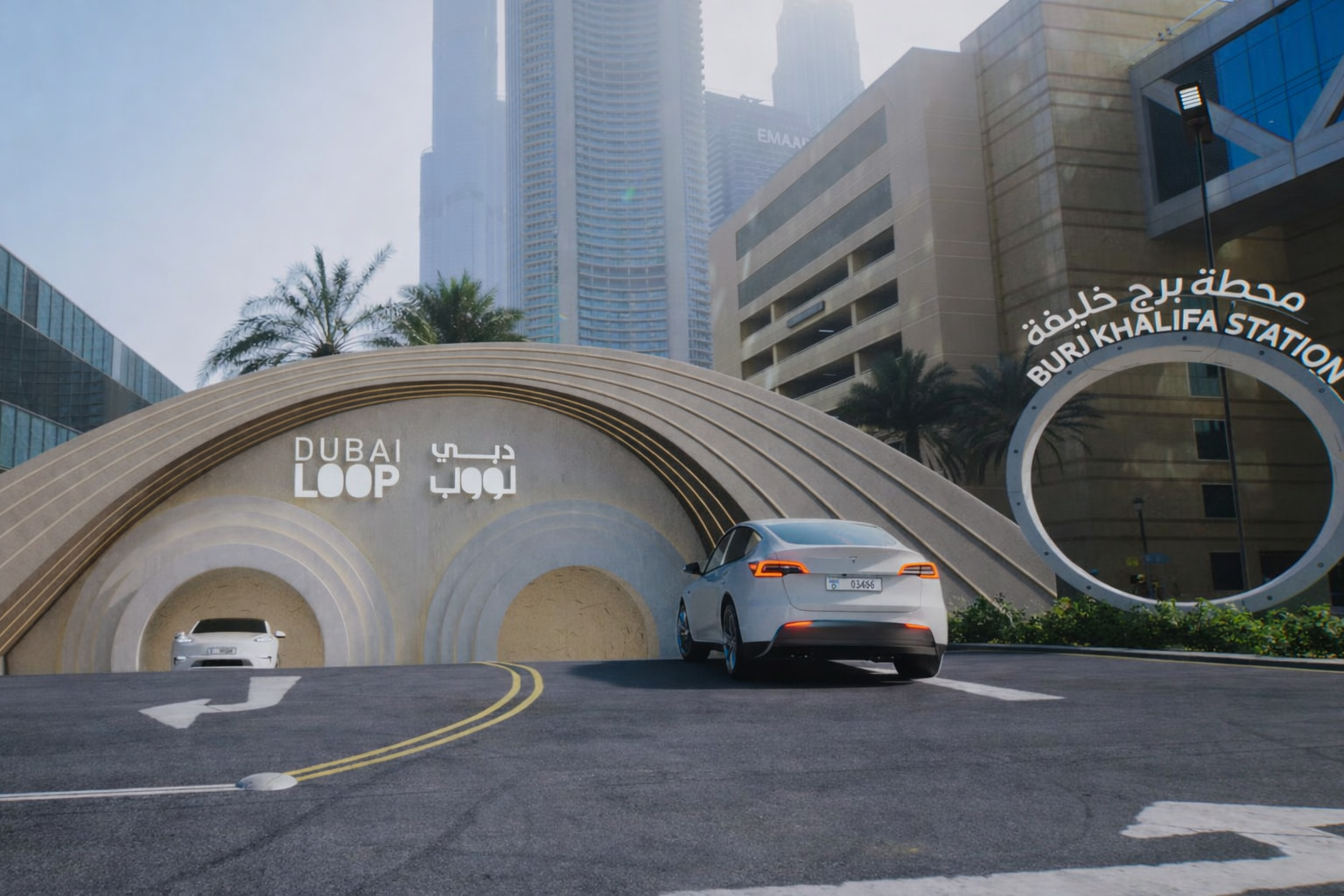
The first phase of the Elon Musk Dubai Loop Underground Project is a 6.4km pilot route designed to link the city’s financial heart with its most iconic retail and tourist destination.
- Key Locations: The first two confirmed stations will be located at the Dubai International Financial Centre (DIFC) and the Dubai Mall/Burj Khalifa.
- Travel Time: The “wormhole” system will slash the typical 20-minute peak-hour commute between these hubs to a mere three minutes.
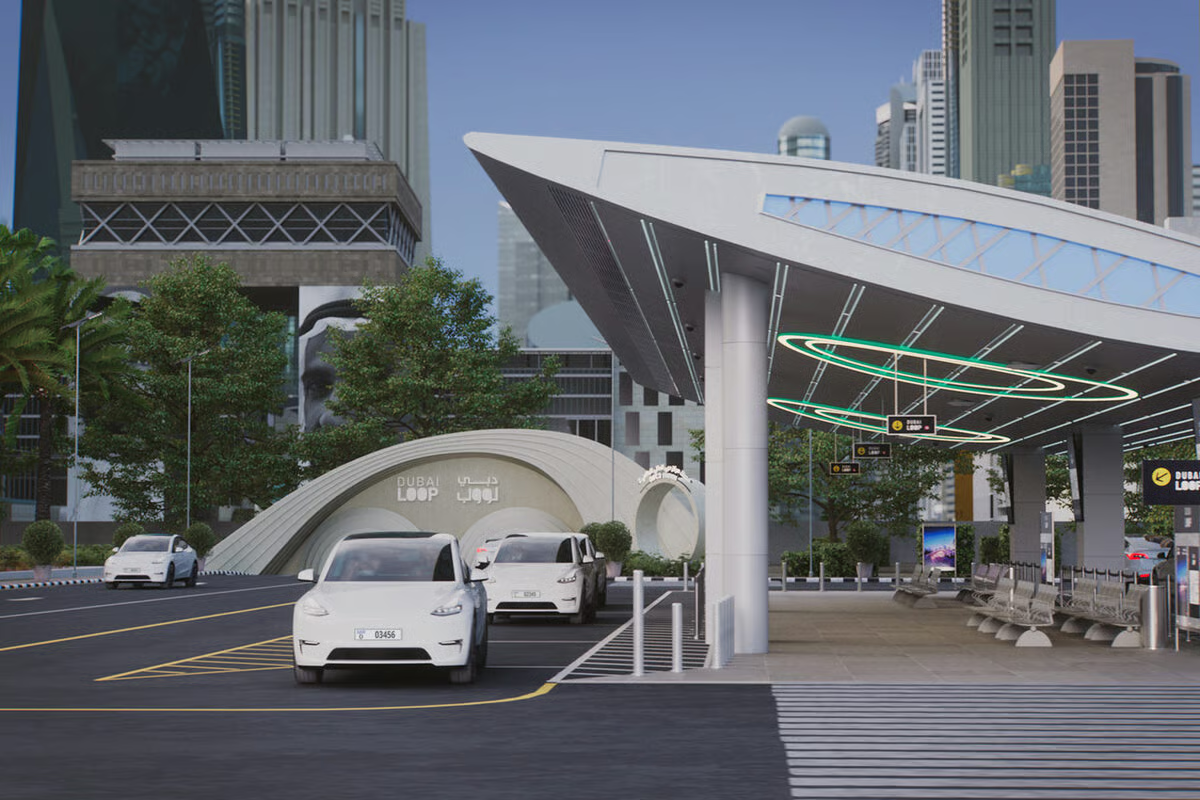
- Initial Capacity: This pilot phase is expected to serve approximately 13,000 passengers per day, utilizing a fleet of zero-emission Tesla vehicles.
The construction of these 3.6-meter-diameter tunnels uses advanced technology that allows for faster delivery and lower costs compared to traditional metro tunneling, ensuring minimal impact on existing utilities and roads.
Speed, Capacity, and the 19-Station Vision
The Elon Musk Dubai Loop Underground Project is engineered for maximum efficiency. Unlike traditional transit, the Dubai Loop Project features direct travel to a passenger’s destination with no intermediate stops, with vehicles capable of reaching speeds of up to 160km/h.
The full network will eventually extend to connect the Dubai World Trade Centre and the Business Bay. This expansion will provide a sustainable, all-electric solution to heavy rush-hour traffic, allowing residents and visitors to “wormhole” from one part of the city to another in seconds.
A Solution for Modern Urban Mobility
Elon Musk first announced the vision for the Elon Musk Dubai Loop Underground Project at the 2025 World Government Summit, describing it as a “wormhole” for the city. Tunnels offer a year-round travel option that is completely shielded from weather conditions, providing a reliable and predictable commute.
By integrating this underground network, Dubai is addressing the “first- and last-mile” connectivity challenges. The Dubai Loop project allows for a gradual descent into straight-line excavation, a method that is significantly more cost-effective than conventional underground systems. With the agreement signed nearly a year ago, the execution is moving rapidly, with the first phase expected to be operational within one to two years.
Conclusion: Moving at the Speed of Light
The Elon Musk Dubai Loop Underground Project is far more than a feat of engineering; it is a shimmering testament to a city that refuses to dream small. By taking transport beneath the surface, Dubai is turning futuristic concepts into a daily reality for its citizens.
This project doesn’t just cut down on travel time—it polishes the city’s legacy as a world leader in smart, sustainable infrastructure. As the first phase gets underway in DIFC and the Dubai Mall.
Whether you are arriving in Dubai for a luxury stay or you are a local watching the skyline—and now the sub-surface—evolve, this Dubai Loop Project is a reminder that in this desert, even the tunnels are glowing with potential.
As the first phase gets underway, it is clear: the “Next Dubai” is already moving at 160km/h.