
UAE Ramadan 2026 Price Freeze: Fines Up to AED 100,000 for Violators
As the Holy Month approaches, the Ministry of Economy has officially announced a full UAE Ramadan 2026 price freeze to protect residents from unnecessary price hikes. “Price protection” now covers nine fundamental food needs, which means that stores can’t increase prices without getting permission from the government. This rule is very strictly followed. This historic...

As the Holy Month approaches, the Ministry of Economy has officially announced a full UAE Ramadan 2026 price freeze to protect residents from unnecessary price hikes. “Price protection” now covers nine fundamental food needs, which means that stores can’t increase prices without getting permission from the government. This rule is very strictly followed.
This historic move strikes a balance between keeping the market stable and making sure everyone has fair access to food at a time of high demand. It will ensure that the UAE Ramadan 2026 price freeze remains the most important way to safeguard consumers.
The UAE Ramadan 2026 Price Freeze Covers 9 Important Food Types
The Ministry has set up nine different groups that are important for people to use at home. The “Pricing Policy for Essential Consumer Goods” says that prices for certain commodities can’t change unless a merchant can show that supplier costs are going up for a solid reason. In such case, they need to fill out a formal application.
There are nine main basics, including:
- Dairy goods including cheese, yogurt, and milk, as well as cooking oil and eggs
- Sugar, rice, chicken, and legumes (beans, lentils, and chickpeas)
- Flour or wheat for bread
These nine categories are locked to stop people from taking advantage of them at certain times of the year. Other non-essential goods are nevertheless affected by normal market supply and demand.
View this post on Instagram
More strict monitoring: digital tracking and 420 inspection visits
To enforce the UAE Ramadan 2026 price limit, the government is starting a stringent monitoring operation that includes both human inspections and cutting-edge technology methods.
- Digital surveillance: A real-time monitoring system that is linked to 627 important retail sites currently covers more than 90% of the country’s domestic trade. This technique promptly flags any price changes that are different from set benchmarks.
- Field Inspections: Teams from the Ministry of Economy and the regional Economic Development Departments will make 420 inspection visits throughout the month.
- Strategic stockpiles: Abdulla bin Touq Al Marri, the Minister of Economy and Tourism, said that there is no practical reason for prices to go up since the country’s food stocks are full.
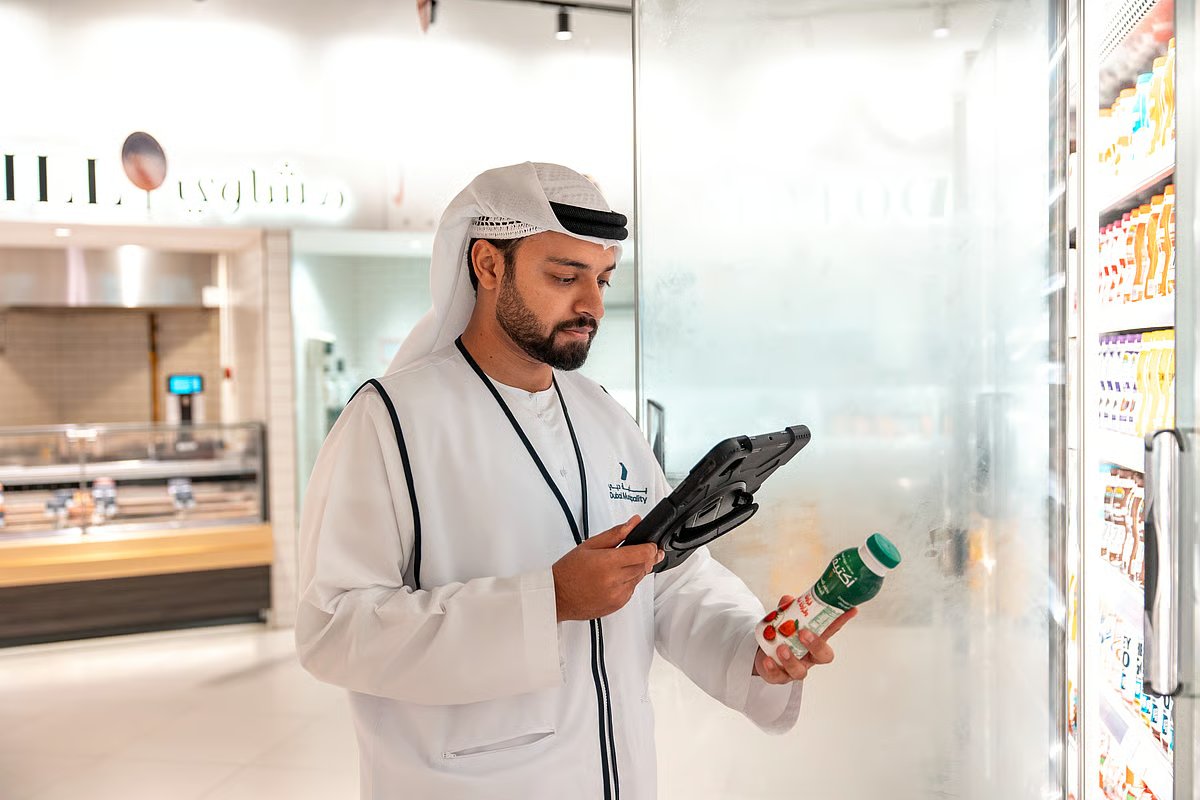
Fines and penalties for breaking the rules in retail
The UAE has a “zero-tolerance” attitude when it comes to price manipulation, fake discounts, and obscuring data. The goal of the progressive punishment plan is to be an effective deterrent.
- Penalties: Range from AED 500 to AED 100,000 for each violation.
- Administrative Action: Businesses that break the rules too many times or too badly may have to shut for a short time.
- Areas of Focus: Inspectors will look for misleading “Ramadan Sale” labels and “prior agreements” between suppliers and merchants to raise prices together.
How to Report a Price Increase: Consumer Rights
The UAE Ramadan 2026 price freeze can only succeed if the people and the government work together. Customers should be “conscious shoppers” and do the following:
- Keep your receipts: Your invoice is the most important legal document you need to prove a violation.
- Look at the “Unit Price”: This is typically posted on shelves to be sure you are getting the proper quantity.
- Report Right Away: If you detect a price rise on any of the nine protected goods that doesn’t make sense, contact the authorities.
- Call 800 1222 to submit a consumer complaint on the toll-free hotline.
- Digital Portals: You may also make complaints on the Ministry of Economy’s official website or smart app.


More from Government & Politics
 Government & Politics
Dubai Sets New Outdoor Ad Rules: What Brands Must Know
Dubai Municipality has introduced new outdoor advertising guidelines across the emirate, establishing unified standards for brands,…
 Government & Politics
UAE Unused Leave 2026: Can You Cash Out or Carry It?
Private sector employees in the UAE who have unused annual leave in 2026 may be able…
 Government & Politics
UAE Pension Boost: Who Can Buy Extra Service Years?
The UAE’s General Pension and Social Security Authority (GPSSA) has announced that eligible Emirati employees can…