Over the last decade, the Gulf has witnessed a transformation unprecedented in its history, and at the center of this evolution stands one of the region’s most powerful partnerships: Saudi Arabia and the United Arab Emirates, specifically Dubai.
Saudi Arabia is the GCC’s largest economy and home to some of the world’s most ambitious mega-projects under Vision 2030.
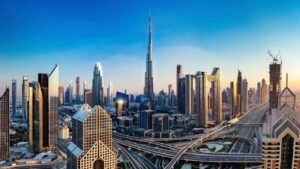
Dubai, meanwhile, is the region’s global hub for trade, finance, tourism, aviation, and innovation, a city that built its identity on reinvention and limitless ambition.
Together, they form a GCC growth engine that drives economic development, regional connectivity, and cultural influence across the Middle East.
This is more than diplomacy.
This is a shared vision, two powerhouses shaping the architecture of the future Gulf.
1. Dubai as Saudi Arabia’s Gateway to the World
For decades, Dubai has served as a gateway for trade and business between Saudi Arabia and the world, connecting the Kingdom to global markets across Asia, Africa, Europe, and beyond.
Dubai’s role as a global logistics and trade hub:
- Jebel Ali Port — the largest port in the Middle East, handles major Saudi shipments.
- Dubai’s free zones (DMCC, JAFZA, DIFC, DAFZ) host hundreds of Saudi-bound companies.
- Dubai Chambers supports Saudi-UAE trade expansion, entrepreneurship, and business setup.
- Global brands targeting Saudi Arabia often base their regional HQs or distribution centers in Dubai.
This interconnected business ecosystem positions Dubai as Saudi Arabia’s launchpad for global trade.
2. Mega-Projects: Dubai’s Influence on Saudi Arabia’s Future City Vision
Saudi Arabia’s giga-projects — NEOM, The Line, Oxagon, Diriyah Gate, Qiddiya, Trojena, and the Red Sea Project, represent the boldest urban development initiatives in modern history.
What many don’t know is that Dubai plays a crucial indirect role in shaping these projects:
Dubai’s impact on Saudi giga-projects:
- Dubai-based architects, engineers, and design studios contribute to NEOM concepts.
- Dubai’s smart mobility systems influence Saudi Arabia’s push for autonomous transport.
- Dubai’s urban branding success inspires the lifestyle and tourism models of Diriyah and AlUla.
- Dubai’s construction, hospitality, and consulting firms are active contributors to Saudi Arabia’s real estate boom.
Dubai is not just a reference point; it is a regional partner and role model for futuristic development.
3. Tourism Flows: Saudi Visitors Power Dubai’s Hospitality Economy
Saudi nationals are among Dubai’s top tourism segments, visiting the city for:
- Weekend getaways
- Shopping and entertainment
- Medical treatments
- Business meetings
- Concerts, events, and festivals
- Family vacations
- Luxury experiences in Downtown Dubai, Palm Jumeirah, and Dubai Marina
Dubai’s appeal to Saudis is unmatched due to:
- Geographical proximity
- Direct flight frequency
- Cultural familiarity
- World-class hospitality
- The diversity of attractions
On the other hand, Dubai residents increasingly travel to Saudi Arabia for:
- Riyadh Season (entertainment capital)
- AlUla (heritage, adventure, arts)
- Hegra (UNESCO site)
- Jeddah waterfront & historic district
- Religious tourism and special events
The Dubai–Saudi tourism corridor is becoming one of the most important travel flows in the Gulf.
4. Aviation: The Strongest Air Corridor in the Middle East
With some of the busiest air routes in the region, Dubai and Saudi Arabia share a sky that never sleeps.
Dubai’s aviation power in the GCC:
- Emirates Airlines operates frequent flights to Riyadh, Jeddah, Dammam, Medina, and more.
- Dubai International Airport (DXB) remains a major transit hub for Saudi travelers heading abroad.
- Flydubai has expanded routes to secondary Saudi cities.
Saudi’s aviation expansion:
- Riyadh Air launch
- King Salman International Airport (one of the world’s largest)
- Expanded Saudia routes connecting directly with Dubai
This air connectivity boosts tourism, business travel, cargo transport, investment movement, and GCC integration.
5. Two-Way Investment: Capital Moving in Both Directions
Dubai and Saudi Arabia have become two of the most interconnected investment markets in the Middle East.
Saudi investments in Dubai:
- Saudi nationals consistently rank in the top foreign buyers of Dubai real estate.
- Saudi family offices and investors participate in Dubai’s tech, fintech, and hospitality sectors.
- Investments flow into Dubai’s free zones and startup hubs.
Dubai investments in Saudi Arabia:
- Dubai-headquartered companies, from retail to logistics to hospitality, are entering Riyadh and Jeddah markets.
- Emirati companies win contracts in NEOM, Oxagon, and Diriyah Gate.
- Dubai entrepreneurs see Saudi Arabia as the fastest-growing market in the region.
The investment relationship is balanced, strategic, and accelerating.
6. Culture & Creativity: A Shared Gulf Identity
Dubai and Saudi Arabia share threads of a common cultural fabric:
- Khaleeji traditions
- Shared heritage
- Hospitality
- Regional arts
- Music, festivals, fashion, and food
- Islamic architecture
The cultural exchange between the two is growing stronger with events like:
- Riyadh Season
- Art Dubai
- Dubai Shopping Festival
- Jeddah Season
- AlUla Arts Festival
Both cities are shaping the region’s cultural identity, one through heritage and arts, the other through innovation and modern lifestyle.
7. Technology & Innovation: Dubai and Saudi Arabia Leading the GCC Tech Race
Dubai and Saudi Arabia are the two largest tech and digital government ecosystems in the region.
Shared tech priorities include:
- AI regulation
- Digital government
- Smart mobility (drones, EVs, autonomous systems)
- Fintech ecosystems
- Space programs
- Renewable energy innovation
- Smart cities
- Cloud & data economy
Dubai’s early success in digital transformation positions it as a model for Saudi Arabia’s tech ambitions, while Saudi Arabia’s large-scale investments in AI and futuristic infrastructure create opportunities for Dubai-based companies and talent.
8. A Unified GCC Future Driven by Dubai & Saudi Arabia
Together, Saudi Arabia and Dubai are shaping:
- The GCC’s economic future
- Regional tourism flows
- Aviation dominance
- Cultural influence
- Smart city development
- Digital transformation
- Investment mobility
- Lifestyle and entertainment ecosystems
As Saudi Arabia transforms under Vision 2030, and Dubai continues its rise as a global hub, their partnership is becoming the central axis of the Middle East’s future.
Dubai acts as the region’s platform, and Saudi Arabia acts as the engine. Together, they are building a Gulf that is more connected, ambitious, and globally influential than ever before.