
Apurva Dubai: A Rare, Beautiful Jugalbandi on 4 December
Apurva Dubai is an evening that brings two great Indian classical traditions onto one stage. Carnatic vocal duo Ranjani and Gayatri join Hindustani sitar star Purbayan Chatterjee for a jugalbandi at Emirates Theatre, Emirates International School, Jumeirah, on Friday, 4 December 2026. Doors open at 6pm and the concert begins at 6.30pm. It’s the first...
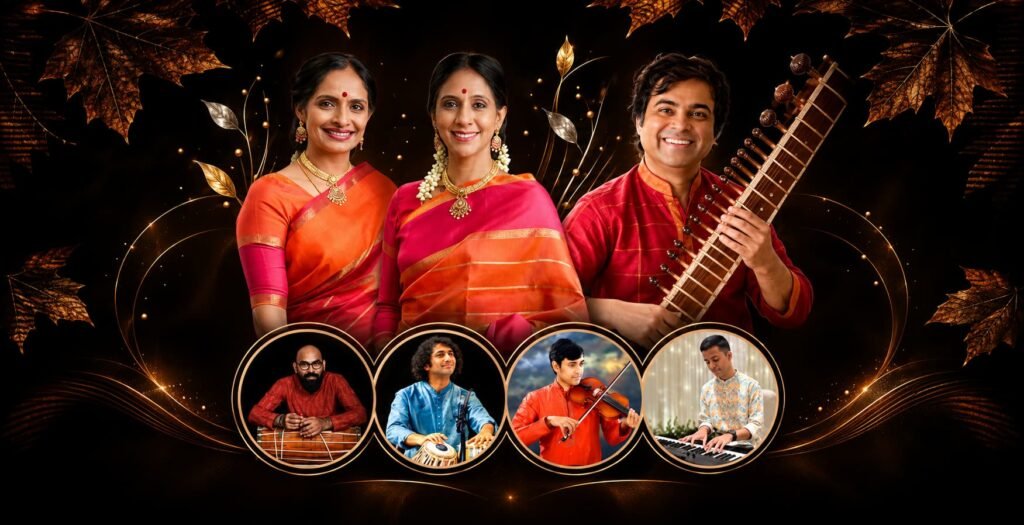
Apurva Dubai is an evening that brings two great Indian classical traditions onto one stage. Carnatic vocal duo Ranjani and Gayatri join Hindustani sitar star Purbayan Chatterjee for a jugalbandi at Emirates Theatre, Emirates International School, Jumeirah, on Friday, 4 December 2026. Doors open at 6pm and the concert begins at 6.30pm. It’s the first time Dubai will host this pairing.
The name means “unique” or “unprecedented”, and for once it fits: this particular combination of artists has never performed together in Dubai before.
Tickets
Tickets are on sale through Platinumlist, with several seating categories across the theatre. The concert is presented by Soaring Phoenix Events in association with Rajalakshmi Fine Arts, and with classical music lovers expected from across the Middle East, it makes sense to pick your seats early.
When South Meets North on One Stage
Indian classical music has two great branches. Carnatic music grew up in the south, with a strong focus on composition and the voice, while Hindustani music developed in the north, known for its long, unfolding explorations of a raga. They share the same roots, but each has its own grammar, instruments and feel.
A jugalbandi is a musical conversation between two soloists, where each answers, challenges and builds on the other. When that conversation happens across the Carnatic and Hindustani traditions, the result is something special: familiar ragas heard from two angles, call-and-response passages that can turn playful, and moments where both styles lock into the same groove.
In Apurva, the voices of Ranjani and Gayatri carry the Carnatic side, while Purbayan’s sitar speaks for the Hindustani tradition.
View this post on Instagram
Meet the Musicians
Ranjani and Gayatri
The sisters grew up in Mumbai in a musical family and began learning the violin as children, Ranjani at nine and Gayatri at six. Before they were even teenagers, they were performing as a violin duo, and went on to accompany legends such as D. K. Pattammal and M. Balamuralikrishna.
In 1997 they turned to singing under the guidance of P. S. Narayanaswamy, and within a few years became one of the most loved vocal duos in Carnatic music. They sing in many languages, from Tamil and Telugu to Marathi and Hindi, and compose much of the devotional abhang repertoire that closes their concerts. In 2026 they were honoured with the Padma Shri.
Purbayan Chatterjee
Born in Kolkata in 1976, Purbayan learned the sitar from his father, Parthapratim Chatterjee, and belongs to the Senia Maihar gharana, the lineage of the great Nikhil Banerjee. He gave his first concert at the age of five, and at fifteen received the President of India award for best instrumentalist in the country.
While deeply rooted in classical music, he’s also known for pushing the sitar into new territory, through his band Shastriya Syndicate and fusion albums such as Stringstruck. He has shared the stage with greats including Ustad Zakir Hussain.
The Supporting Ensemble
A strong set of accompanists rounds out the evening:
- Vittal Rangan on violin
- Sai Giridhar on mrudangam
- Ojas Adhiya on tabla
- Hemant Gadkari on keyboard
With both mrudangam and tabla on stage, expect some lively rhythmic exchanges between the southern and northern percussion traditions too.
The Evening and Getting There
Doors open at 6pm on Friday, 4 December, with the music starting at 6.30pm. The early start makes it an easy family outing, and the listing suggests the evening should wrap up at around 10pm.
Emirates Theatre is inside Emirates International School on Al Thanya Street in Jumeirah. If you’re driving, head along Al Safa Street and turn right onto Al Thanya Street; the school is on your right. Taxis are an easy option too, since most drivers know the school well.
Aim to arrive soon after the doors open. Classical concerts like this usually begin right on time, and you won’t want to miss the opening piece while hunting for your seat.
Two Traditions, One Unforgettable Evening
For lovers of Indian classical music in the UAE, nights like this don’t come along often. Apurva Dubai offers the rare chance to hear the warmth of Carnatic vocals and the shimmer of the Hindustani sitar weave around each other, live and in the same room. Whether you grew up with these ragas or are discovering them for the first time, it promises an evening that will stay with you long after the last note fades.


More from Entertainment
 Entertainment
New Year’s Eve Fireworks UAE: 20+ Best Spots to Ring in 2027
New Year’s Eve fireworks UAE plans are starting to take shape, and with Thursday, 31 December…
 Entertainment
Dubai International Film Festival Returns in 2027
The iconic Dubai International Film Festival is officially set to make a monumental return to the…
 Entertainment
Global Village Season 31 Opening Date Officially Announced
After months of mounting anticipation, the highly awaited opening date for Global Village Season 31 has…