
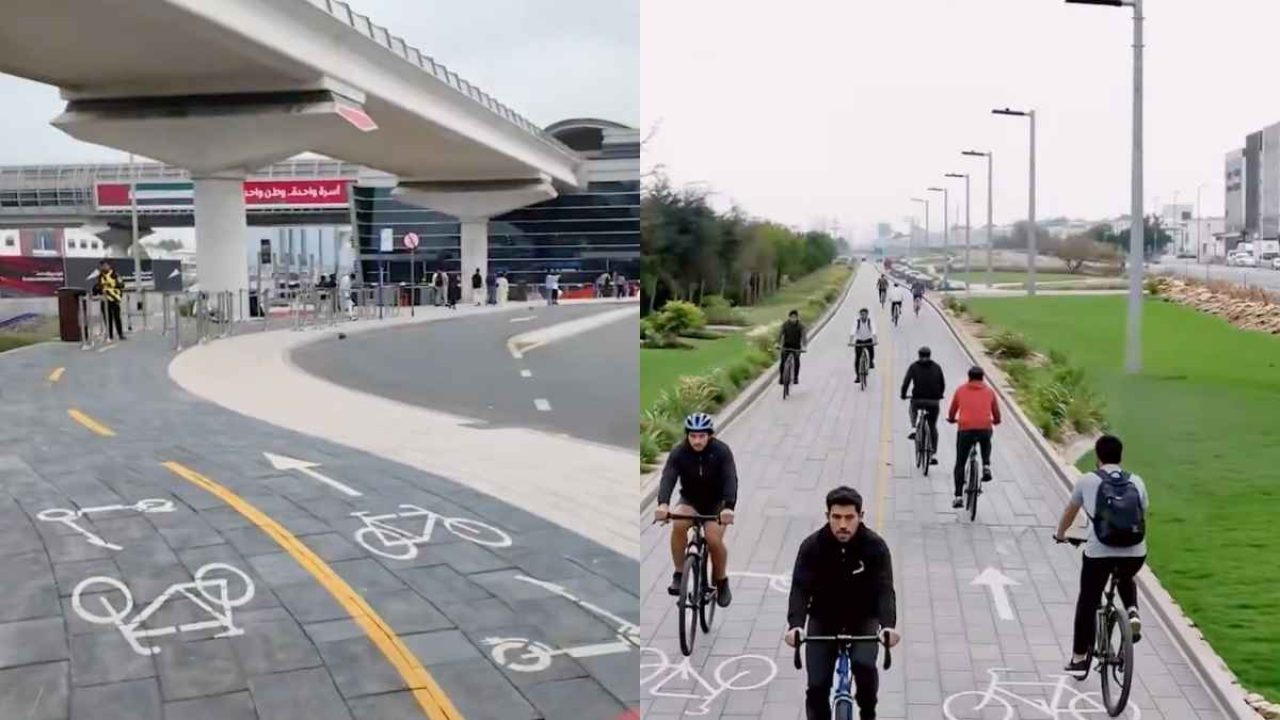
Dubai’s landscape is undergoing a massive transformation, shifting from a car-centric metropolis to a world-class, cycling-friendly city. The Roads and Transport Authority (RTA) has recently hit a major milestone by completing 13 new cycling tracks, moving the emirate closer to its ambitious goal of a 1,000km integrated cycling network by 2030.
As of March 2026, the RTA has accelerated its infrastructure projects, focusing on safety, connectivity, and sustainability. This expansion isn’t just about recreation; it is a strategic move to redefine urban mobility and enhance the quality of life for millions of residents.
The 162km Master Plan: Connecting the Dots
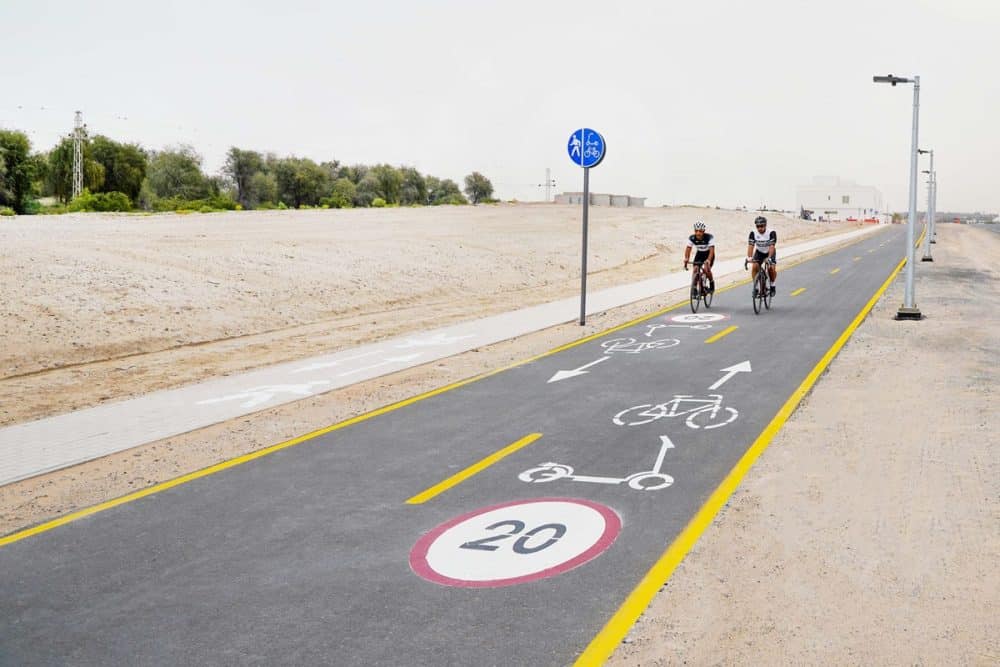
The newly completed tracks are part of a broader, high-priority master plan that covers 15 distinct routes stretching over 162 kilometers. The primary objective of this phase is to bridge the gap between residential communities and the city’s major commercial and leisure hubs.
By focusing on “first and last-mile” connectivity, the RTA is ensuring that residents can leave their cars behind and use bicycles or e-scooters to reach Metro stations and bus terminals. Key routes that are now fully operational include:
- Al Khawaneej to Al Mamzar Beach: Providing a seamless corridor for residents in the eastern districts to reach the coastline.
- Al Warqa’a to Saih Al Salam: Connecting growing residential zones with the famous Al Qudra cycling area.
- DIFC to Jumeirah: Linking the city’s premier financial district with the iconic beachfront lifestyle of Jumeirah.
Breaking Barriers: New Pedestrian and Cycling Bridges
One of the most significant challenges in a city like Dubai is crossing high-speed highways. To solve this, the RTA is constructing some of the region’s largest and most architecturally advanced cycling bridges. These structures are designed to be safe, climate-conscious, and aesthetically pleasing.
1. The Sheikh Zayed Road & Al Khail Road Bridges
The Hessa Street development is perhaps the most impressive project in the current pipeline. It includes a 13.5km corridor linking Al Sufouh to Dubai Hills. To make this possible, two massive bridges have been designed:
- Sheikh Zayed Road Bridge: A 528-meter long dedicated path for cyclists and pedestrians.
- Al Khail Road Bridge: A 501-meter structure that allows safe passage over one of Dubai’s busiest arteries.
2. Connecting Al Twar and Silicon Oasis
Two other major bridges are under construction to link key suburbs:
- An 816-meter bridge over Sheikh Mohammed bin Zayed Road, connecting Al Twar and Al Muhaisnah.
- A 719-meter bridge over Dubai—Al Ain Road, finally linking Dubai Silicon Oasis (DSO) with the Liwan community.
Global Recognition: The 2025 Copenhagenize Index
Dubai’s hard work has not gone unnoticed on the international stage. In 2025, Dubai became the first city in the Middle East to be ranked among the Top 100 Cycling-Friendly Cities in the prestigious Copenhagenize Index.
This ranking is a testament to the rapid pace of development. Between 2024 and 2025, the total length of cycling tracks in Dubai grew from 560km to 636km. This infrastructure boost led to a record-breaking 57.3 million cycling trips in a single year—a 23.5% increase compared to the previous period.
Soft Mobility and the “Safe Streets” Concept
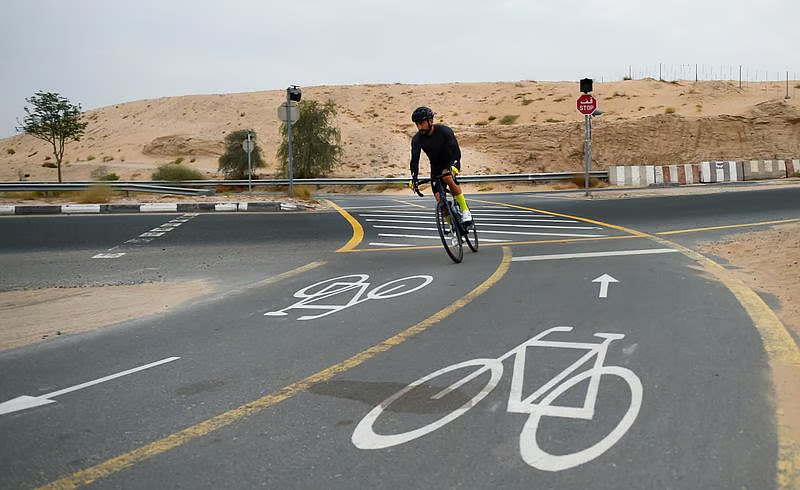
Beyond the major tracks, the RTA is implementing the “Soft Mobility” project in older parts of the city like Al Souk Al Kabeer, Hor Al Anz, and Abu Hail. This involves:
- Upgrading pedestrian walkways to be wider and more accessible.
- Integrating dedicated e-scooter lanes to prevent sidewalk congestion.
- Improving connectivity to five major transport hubs: BurJuman, Sharaf DG, Palm Deira, Baniyas, and Burj Khalifa/Dubai Mall stations.
In the Al Quoz industrial and creative district, 7km of new tracks now connect the area to the ONPASSIVE Metro Station, making it easier for artists and workers to commute sustainably.
Future Outlook: Expansion into 2026 and Beyond
The RTA is currently working on an additional 64km of tracks that will penetrate deeper into the city’s residential heartlands. Expected completions in the coming months include:
- Al Khawaneej 2 and Al Barsha 2: Under the Model Residential Neighbourhoods Project.
- Wadi Al Safa 5: A 3.2km track connecting Emirates Road with Sheikh Zayed bin Hamdan Al Nahyan Street.
- Al Safa 4: A 2km route serving Falcon City and the City of Arabia.
Conclusion: A Healthier, Greener Dubai
With user satisfaction reaching 85% and more than 22% of the population now having direct access to cycling infrastructure, Dubai is successfully shifting the narrative of urban travel. The goal of a 1,000km network by 2030 is no longer just a vision—it is a reality being built kilometer by kilometer.
Whether you are a professional athlete, a daily commuter, or a family looking for a weekend outdoor activity, Dubai’s expanding cycling network offers a safe, modern, and world-class environment for everyone.


